



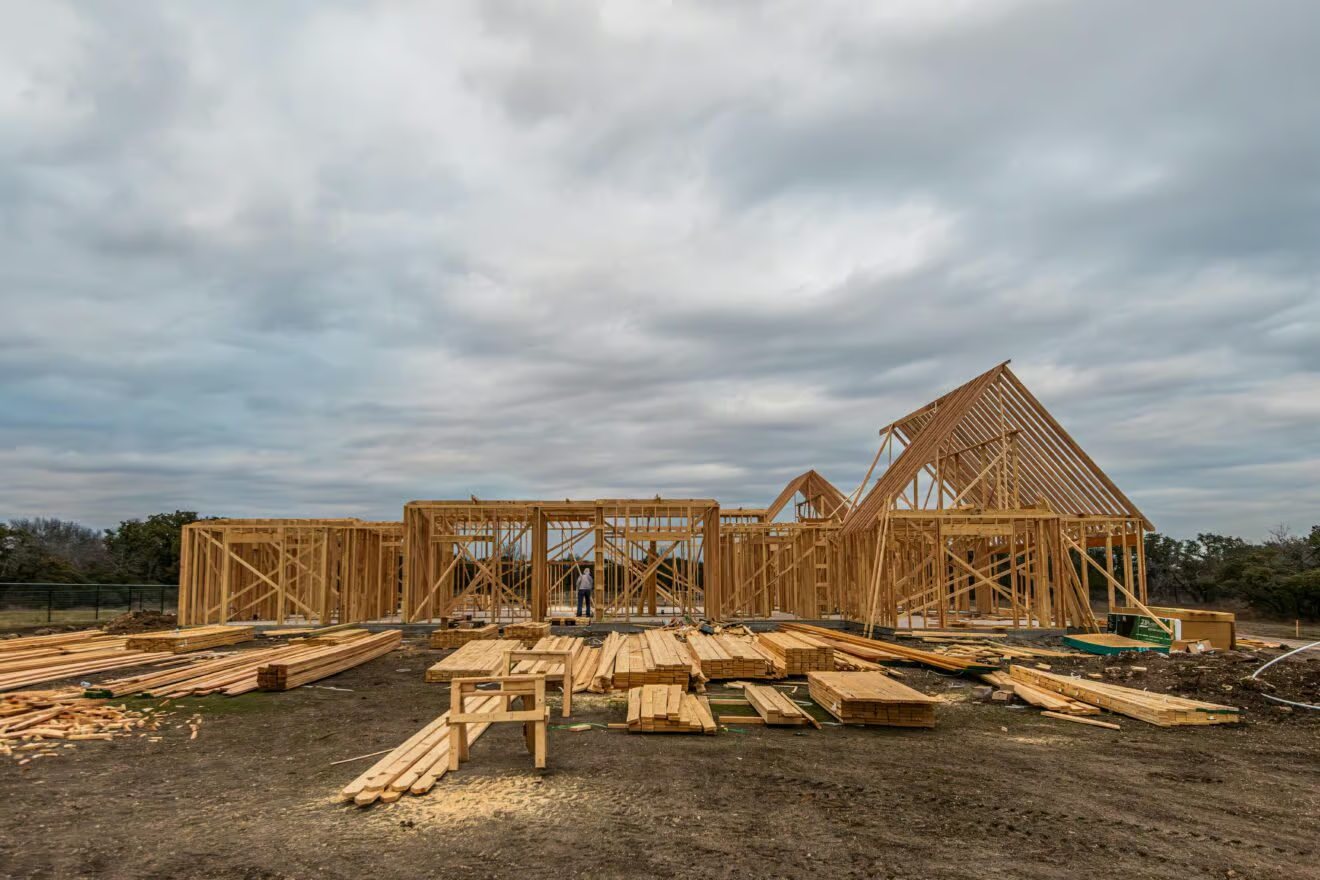
This week brought a wave of housing-related policy announcements from both the federal and provincial governments. While positioned as affordability measures, many of these changes appear to be just as focused on supporting developers and restarting a new construction market that has slowed considerably.
HST Rebates for New Homes, What It Really Means
You may have seen recent headlines around expanded HST rebates for homebuyers in Ontario, with savings of up to $130,000 being discussed.
At first glance, it sounds like a meaningful step toward improving affordability. And for some buyers, particularly those considering new construction, it absolutely is.
That said, it is important to understand where this actually applies.
The rebate is specific to newly built homes and does not extend to resale properties. It also provides the most benefit at lower price points, with the full rebate applying to homes under $1M and tapering off as prices increase.
It is also important to note that the rebate applies only to new agreements entered into after the program start date. If you purchased a new build prior to that date, there is unfortunately no mechanism to retroactively qualify.
This creates a bit of an unintended consequence. Buyers who committed to new construction just prior to the policy change may now find themselves at a relative disadvantage, particularly if competing inventory begins to benefit from the rebate. In some cases, this could put downward pressure on resale values for those properties in the short term.
There is also a broader question around who ultimately benefits from a policy like this. While it certainly helps some buyers, it may also provide support to developers who have been facing slower sales and rising inventory in the new construction segment. In that sense, it may act as much as a stimulus for new housing supply as it does an affordability measure.
What has changed is that this may encourage more buyers to consider new construction, particularly those who were already on the fence.
However, it likely will not have a major impact on the broader housing market. It does not address supply constraints, and in some cases, increased demand for new builds can put upward pressure on pricing in that segment.
From a practical standpoint, this is less about dramatically improving affordability and more about influencing timing and decision-making for buyers already considering new construction.
As always, if you are weighing your options between resale and new build, I am happy to walk through how this may apply to your specific situation.
Development Charge Cuts, What It Really Means
You may have seen the recent announcement around reducing development charges in Ontario, with governments encouraging municipalities to cut fees by up to 50%.
At a high level, the goal is to lower construction costs and improve affordability.
In reality, the impact is likely more nuanced.
In the short term, this feels as much like support for developers as it does a direct benefit for buyers. The new construction sector has been under pressure, and this may help get stalled projects moving again.
The question is how much of those savings actually reach buyers.
There is also a trade-off. Development charges help fund infrastructure, and if they are reduced, those costs may shift back onto taxpayers.
From a market perspective, this could increase activity in new construction, but it is unlikely to solve affordability on its own.
As always, we will be watching how this plays out in real time.

Book a Consultation with Us
Thinking about your next home sale or purchase? Get the process started and reach out to our team today.